News
IPL
Indian Cricket Team
Women's World Cup 2025
International Cricket
Women’s Premier League (WPL)
Features
Watch
Interviews

The Curious Case of Rasikh Salam: Why Is One Of IPL 2026’s Best Indian Pacers Still Waiting For T20I Call Up?

The Indian selectors have made their intentions abundantly clear over the last few T20I series. They are building a pace attack for T20 World Cup 2028 in Australia, prioritising outright pace, steep bounce, hard lengths and bowlers capable of troubling batters on quicker Australian surfaces with skiddy action and seam movement.

It is a logical strategy. Australia has historically rewarded fast bowlers who can consistently operate in the 145-150 kph range and extract extra bounce. But while chasing that blueprint, the selectors seem to have overlooked someone who actually possesses several of those qualities, even if he doesn’t tick every box.

That bowler is Rasikh Salam.

His omission has become increasingly difficult to understand, especially after the IPL season he just had.

Rasikh Salam deserved far more after IPL 2026

Numbers don’t tell the entire story in cricket, but they are often a good place to begin.

Playing for RCB, Rasikh Salam picked up 19 wickets in IPL 2026 at an outstanding average of 21.32. Among Indian pacers who bowled a minimum of 30 overs, only Bhuvneshwar Kumar finished with a better bowling average.

His strike rate was even more impressive.

Rasikh Salam struck every 13.53 deliveries, again second only to Bhuvneshwar among Indian fast bowlers meeting the qualification criteria.

These aren’t inflated statistics collected on slow pitches or in low-scoring contests. They came in the IPL, where bowlers continue to operate under immense pressure, defend small boundaries and survive on batting-friendly surfaces.

Yet when India announced successive T20I squads, the Jammu & Kashmir pacer found himself watching from the outside.

Instead, opportunities arrived for Prince Yadav, Ashok Sharma and Mayank Yadav despite all three recording inferior IPL numbers.

That naturally raises one question. What exactly does Rasikh Salam still need to do?

Is raw pace outweighing performances?

Looking from the selectors’ perspective, the thought process isn’t difficult to decode.

India appear determined to assemble a battery of quicks suited for Australian conditions ahead of the T20 World Cup 2028. Bowlers capable of touching 145-150 kph, attacking the pitch with hard lengths and generating awkward bounce have understandably become attractive options.

It explains the investments being made in several young fast bowlers.

But there is a difference between having a clear vision and becoming too rigid with it.

Because Rasikh Salam may not consistently clock 150 kph, but he certainly isn’t a medium pacer either.

He comfortably operates in the early 140s, possesses a naturally skiddy action and gets the ball to hurry onto batters. More importantly, he offers something every successful T20 attack desperately needs — versatility.

He can swing the new ball. He can hit awkward lengths through the middle overs. And he has developed effective slower balls and variations at the death.

Those are qualities that win T20 matches irrespective of whether the speed gun flashes 141 or 149.

Also Read: Stop Blaming Alastair Cook or Dinesh Karthik. Cricket’s Broken Calendar is the Real Problem

Rasikh Salam has already answered difficult questions

One of the strongest arguments in Rasikh Salam’s favour is that he has already been tested repeatedly.

This isn’t a one-season wonder who has suddenly emerged out of nowhere.

Across the last three IPL campaigns, he has gradually refined his craft, learned to bowl in pressure situations and improved against some of the world’s best batters.

Doing that while bowling in Indian conditions is arguably harder than operating in Australia, where bigger boundaries and more assistance for seam bowlers often provide greater margin for error.

If anything, Australian conditions should complement Rasikh Salam’s strengths.

His skiddy trajectory, ability to move the new ball and intelligent use of cutters could become even more effective on surfaces offering extra pace and carry.

That makes his continued absence even more puzzling.

Performance still has to matter

No one is suggesting India should abandon their long-term planning. Investing in express pace is absolutely the right move.

But selection should never become so template-driven that performances stop carrying weight.

If a bowler finishes among the best Indian pacers in the IPL in both average and strike rate, repeatedly executes different phases of an innings and keeps improving every season, he deserves at least an opportunity to prove himself at international level.

That opportunity has so far eluded Rasikh Salam.

Perhaps the selectors see technical limitations the public doesn’t. Perhaps they believe others possess a higher ceiling. But from the outside, the evidence points the other way.

The performances are there. The skillset is there. The temperament has been tested under pressure. And the conditions at the T20 World Cup 2028 could actually amplify his strengths rather than expose weaknesses.

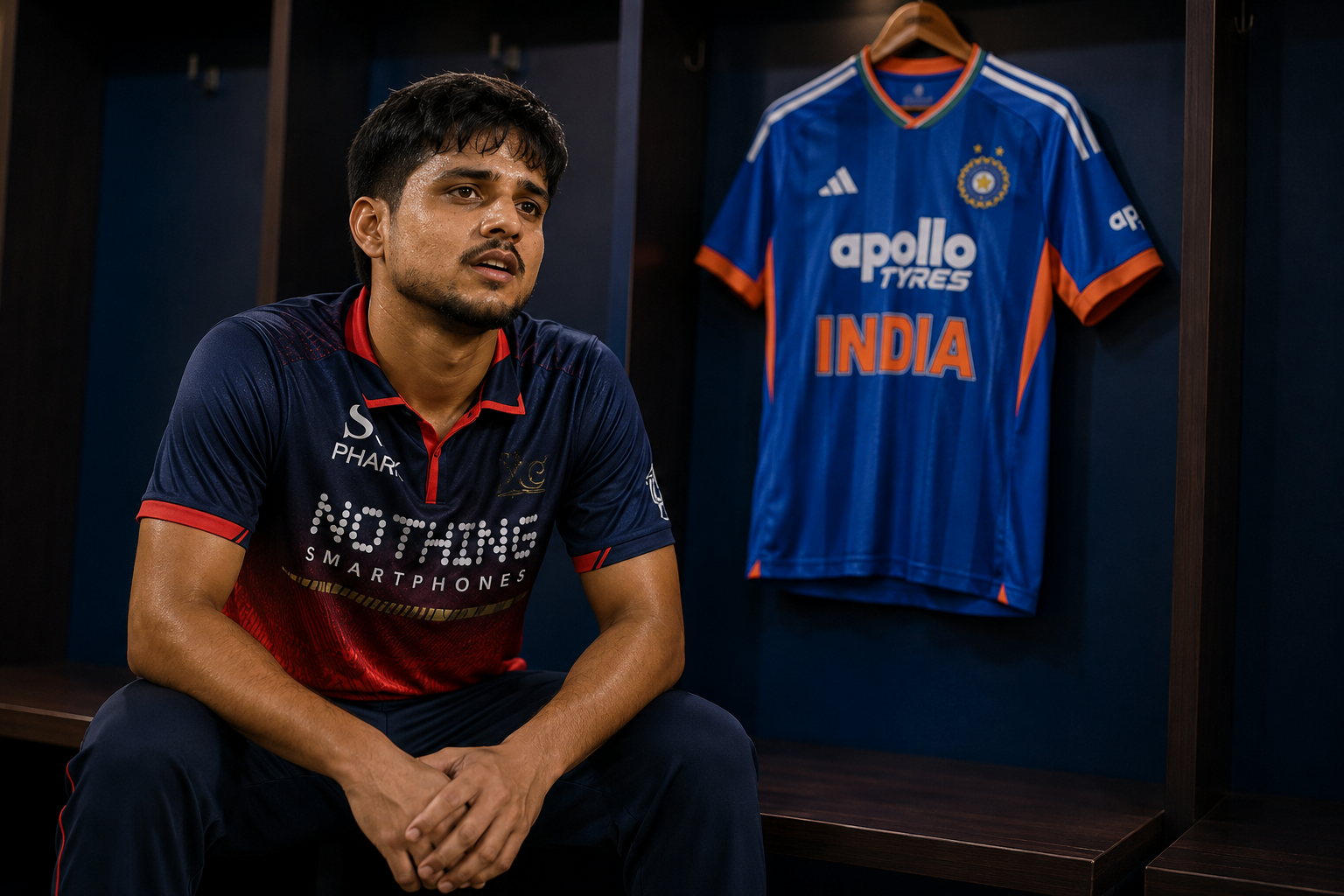
Which is why Rasikh Salam remains one of the most intriguing selection omissions in Indian cricket today. His numbers have earned attention, his bowling has earned respect, but somehow, the India cap continues to remain just out of reach.

The Curious Case of Rasikh Salam: Why Is One Of IPL 2026’s Best Indian Pacers Still Waiting For T20I Call Up?

The Indian selectors have made their intentions abundantly clear over the last few T20I series. They are building a pace attack for the T20 World Cup 2028 in Australia — one that prioritises outright pace, steep bounce, hard lengths and bowlers capable of troubling batters on quicker Australian surfaces with skiddy action and seam movement.

It is a logical strategy. Australia has historically rewarded fast bowlers who can consistently operate in the 145-150 kph range and extract extra bounce. But while chasing that blueprint, the selectors seem to have overlooked someone who actually possesses several of those qualities, even if he doesn’t tick every box.

That bowler is Rasikh Salam.

His omission has become increasingly difficult to understand, especially after the IPL season he just had.

Rasikh Salam deserved far more after IPL 2026

Numbers don’t tell the entire story in cricket, but they are often a good place to begin.

Playing for RCB, Rasikh Salam picked up 19 wickets in IPL 2026 at an outstanding average of 21.32. Among Indian pacers who bowled a minimum of 30 overs, only Bhuvneshwar Kumar finished with a better bowling average.

His strike rate was even more impressive.

Rasikh Salam struck every 13.53 deliveries, again second only to Bhuvneshwar among Indian fast bowlers meeting the qualification criteria.

These aren’t inflated statistics collected on slow pitches or in low-scoring contests. They came in the IPL, where bowlers continue to operate under immense pressure, defend small boundaries and survive on batting-friendly surfaces.

Yet when India announced successive T20I squads, the Jammu & Kashmir pacer found himself watching from the outside.

Instead, opportunities arrived for Prince Yadav, Ashok Sharma and Mayank Yadav despite all three recording inferior IPL numbers.

That naturally raises one question. What exactly does Rasikh Salam still need to do?

Is raw pace outweighing performances?

Looking from the selectors’ perspective, the thought process isn’t difficult to decode.

India appear determined to assemble a battery of quicks suited for Australian conditions ahead of the T20 World Cup 2028. Bowlers capable of touching 145-150 kph, attacking the pitch with hard lengths and generating awkward bounce have understandably become attractive options.

It explains the investments being made in several young fast bowlers.

But there is a difference between having a clear vision and becoming too rigid with it.

Because Rasikh Salam may not consistently clock 150 kph, but he certainly isn’t a medium pacer either.

He comfortably operates in the early 140s, possesses a naturally skiddy action and gets the ball to hurry onto batters. More importantly, he offers something every successful T20 attack desperately needs — versatility.

He can swing the new ball. He can hit awkward lengths through the middle overs. And he has developed effective slower balls and variations at the death.

Those are qualities that win T20 matches irrespective of whether the speed gun flashes 141 or 149.

Rasikh Salam has already answered difficult questions

One of the strongest arguments in Rasikh Salam’s favour is that he has already been tested repeatedly.

This isn’t a one-season wonder who has suddenly emerged out of nowhere.

Across the last three IPL campaigns, he has gradually refined his craft, learned to bowl in pressure situations and improved against some of the world’s best batters.

Doing that while bowling in Indian conditions is arguably harder than operating in Australia, where bigger boundaries and more assistance for seam bowlers often provide greater margin for error.

If anything, Australian conditions should complement Rasikh Salam’s strengths.

His skiddy trajectory, ability to move the new ball and intelligent use of cutters could become even more effective on surfaces offering extra pace and carry.

That makes his continued absence even more puzzling.

Performance still has to matter

No one is suggesting India should abandon their long-term planning. Investing in express pace is absolutely the right move.

But selection should never become so template-driven that performances stop carrying weight.

If a bowler finishes among the best Indian pacers in the IPL in both average and strike rate, repeatedly executes different phases of an innings and keeps improving every season, he deserves at least an opportunity to prove himself at international level.

That opportunity has so far eluded Rasikh Salam.

Perhaps the selectors see technical limitations the public doesn’t. Perhaps they believe others possess a higher ceiling. But from the outside, the evidence points the other way.

The performances are there. The skillset is there. The temperament has been tested under pressure. And the conditions at the T20 World Cup 2028 could actually amplify his strengths rather than expose weaknesses.

Which is why Rasikh Salam remains one of the most intriguing selection omissions in Indian cricket today. His numbers have earned attention, his bowling has earned respect, but somehow, the India cap continues to remain just out of reach.