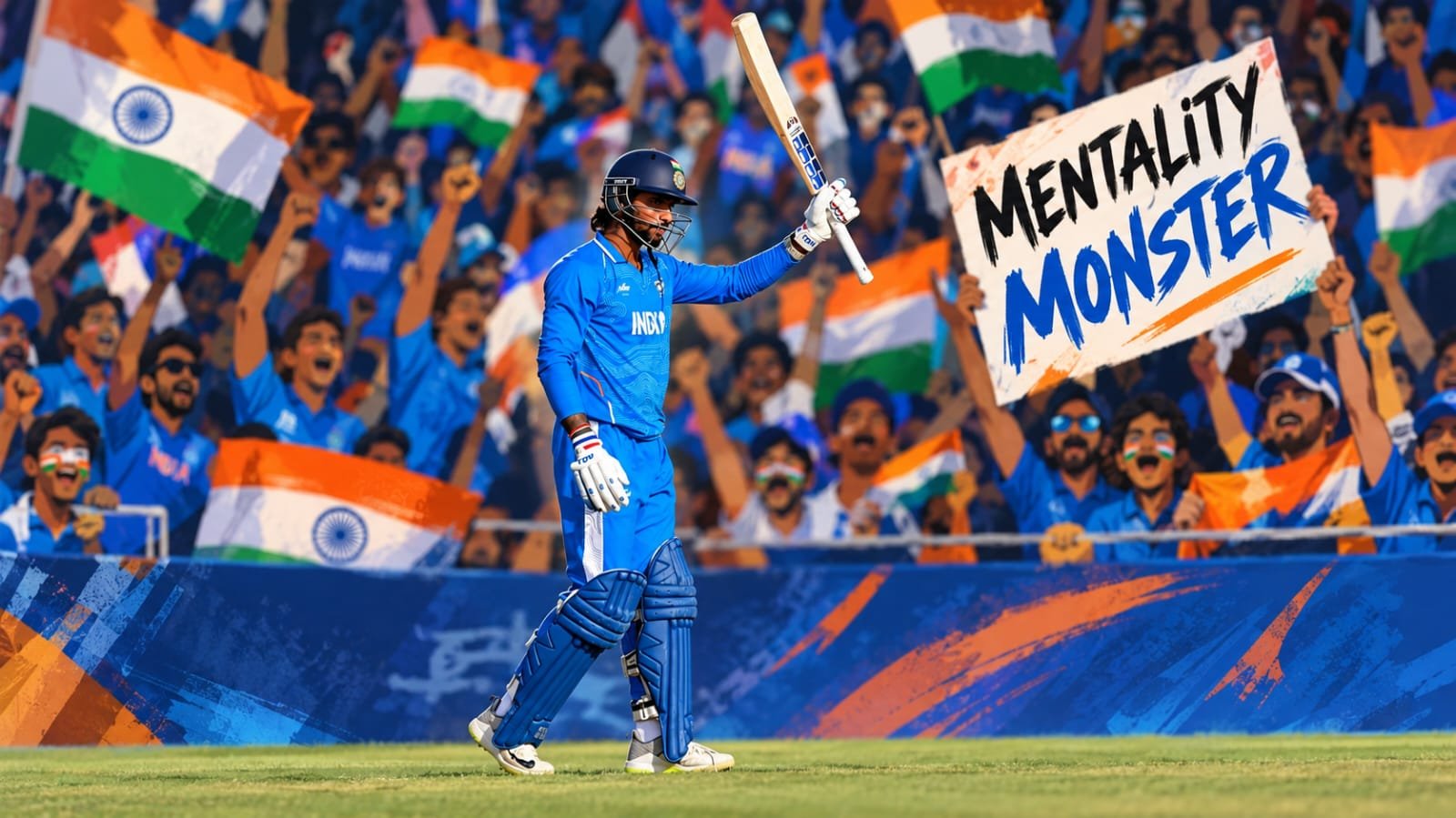


Tilak Varma, the mentality monster: Finding the perfect role for an imperfect T20 batter



Tilak Varma is not the perfect T20 batter. In fact, he is quite far from it.
There are limitations in his game which have become increasingly difficult to ignore. Spin can tie him down. His first few balls against slower bowlers can be painful to watch when the required rate is climbing. There are phases where the intent is there but the boundary options simply aren’t.
And yet, when the occasion gets bigger, Tilak somehow seems to get better. Maybe that is what makes him such a fascinating T20 cricketer. Because if there is one thing nobody should question about Tilak, it is his mentality.
A year after producing an unbeaten 69 off 53 balls against Pakistan in the Asia Cup 2025 final, Tilak turned up against the same opposition in another final and produced something completely different. This time, he smashed an unbeaten 51 off just 22 deliveries in the Asian Games 2026 gold-medal match as India posted 211/6 before winning by 19 runs.
That Asia Cup knock was about survival first and finishing later. India were 20/3 in a chase of 147 when Tilak found himself in the middle. Abhishek Sharma, Shubman Gill and Suryakumar Yadav were all gone. Tilak had to absorb the pressure, rebuild with Sanju Samson and then take the chase deep. He finished unbeaten and was named Player of the Match.
At the Asian Games, India didn’t need that version of Tilak. They needed someone to finish an innings.
He walked in at No.6 and smashed 51* off 22. Alongside Shivam Dube, he added 62 from 31 balls for the sixth wicket, with India plundering 46 runs from the final three overs.
And perhaps therein lies the answer to India’s Tilak Varma problem.
Tilak doesn’t need to be the perfect No.4
For a long time, the obvious way to look at Tilak was as a middle-order batter capable of becoming a long-term No.3 or No.4.
The problem is that those positions also expose one of the biggest weaknesses in his game.
Spin.
Opposition teams have increasingly understood that Tilak can be slowed down by spin, particularly when he has just arrived at the crease. Earlier this year, there were already concerns about his tendency to become stuck against slower bowling.
During India’s first T20I against England in July, for instance, he came in with India scoring at more than 10 runs per over and made 13 off 13 as the innings lost momentum. That’s dangerous in modern T20 cricket.
India aren’t building a side where a batter can routinely take 10 or 12 deliveries to get going simply because he might compensate later.
But what if they don’t need Tilak to solve that problem immediately?
What if the easier solution is simply to change when he bats?
The positional numbers tell an interesting story.
At No.4, Tilak has scored at a strike rate of 128.60 in T20Is. That number rises considerably to 143.46 when he moves down the order to No.5 and to 184.33 at No.6. The exact figures will continue changing with every innings, but the broader pattern is becoming difficult to ignore: Tilak has been significantly more explosive when used later.
That makes sense tactically as well. Bat at No.4 and there is a good chance Tilak enters somewhere between overs six and 12. That is precisely when teams are looking to squeeze the game with spin.
Come in at No.5 or No.6 and the equation changes.
There is less time to settle, yes. But there is also a greater probability of facing pace, particularly as teams bring their quicks back for the death overs. And pace is something Tilak can tonk.
Pakistan saw exactly that in the Asian Games final. Tilak initially had to negotiate the spinners rather than blindly attack them. Once he got through that phase, he exploded.
He hit two sixes in the 18th over, found another boundary against Saim Ayub in the 19th and struck two more sixes in the final over. That is a role India can work with.
Also Read: Rohit Sharma Is On A Leash, But There’s A Way To Break Free
Don’t let the No.3 strike rate fool you either
There is another number that complicates the discussion.
Tilak’s strike rate at No.3 is comfortably above 150. On the surface, that should settle the debate. Why hide someone down the order if he has been that destructive at first drop?
Well, context matters.
Batting at No.3 means Tilak has also had opportunities to enter during the powerplay. His two T20I centuries against South Africa, for example, came from No.3. That doesn’t make those runs or his strike rate any less valuable, but, at the same time, batting-position numbers cannot be read without considering when a batter actually entered.
The more relevant question for India is what happens when Tilak has to begin against spin after the field spreads. That remains the concern. And it is why the move down the order makes sense.
So why replace him if the new role is working?
This is where India’s selection debate becomes interesting.
There may be other middle-order batters with cleaner games against spin. There may be players capable of attacking from ball one more consistently. India certainly have enough batting depth to keep looking.
But Tilak isn’t exactly giving them a reason to drop him either. Instead, India appear to be finding a way to maximise what he can do rather than obsessing over what he cannot. That is smart T20 management.
Not every batter needs to dominate every type of bowling. Not every player needs to be capable of batting from No.3 to No.7 without his effectiveness changing.
Sometimes role clarity is about engineering the conditions in which a player’s strengths are most useful.
And Tilak brings something that is considerably harder to quantify than strike rate against spin.
He wants the big moment.
The Asia Cup final showed it when India were 20/3 and Pakistan could smell the trophy.
The Asian Games final showed it again when India needed someone to turn a good total into a potentially match-winning one.
That doesn’t erase Tilak Varma’s limitations though, and it shouldn’t. But perhaps India don’t need to erase them.
If batting him at No.5 or No.6 reduces his exposure to the phase where he is most vulnerable and increases his exposure to the bowling he can destroy, why complicate it?
Tilak wasn’t doing enough at No.4. Further down, he increasingly looks like he is.
India don’t necessarily have to choose between fixing Tilak Varma and replacing Tilak Varma. They might simply have to keep using their mentality monster where he causes the most damage.